End Poverty
Ending poverty is goal 1 of the 2030 Agenda for Sustainable Development.
Fight Hunger
Fighting hunger is goal 2 of the 2030 Agenda for Sustainable Development.
Fighting Hunger and Poverty
Our Programs Aim To:
● Implement livelihood programs focused on entrepreneurship and skill development, helping vulnerable communities increase access to food and income.
● Provide startup support to rural and urban farming initiatives that enhance quality of life.
● Educate families on managing their own food sources through practical workshops.
● Equip small farmers with innovative farming techniques to boost crop production and income potential.
● Support families recovering from forced displacement with resources,
including land-to-farm programs.
According to the United Nations, an estimated 673 million people were
undernourished in 2024, and nearly 2.3 billion faced moderate or severe food insecurity worldwide. These numbers highlight persistent inequality in access to adequate food and nutrition. Poverty encompasses far more than a lack of income, it also includes hunger and malnutrition, limited access to essential services, social exclusion, and barriers to participation in decisionmaking. For this reason, it is critical to equip communities with the tools and resources needed to build sustainable livelihoods and reduce inequality.
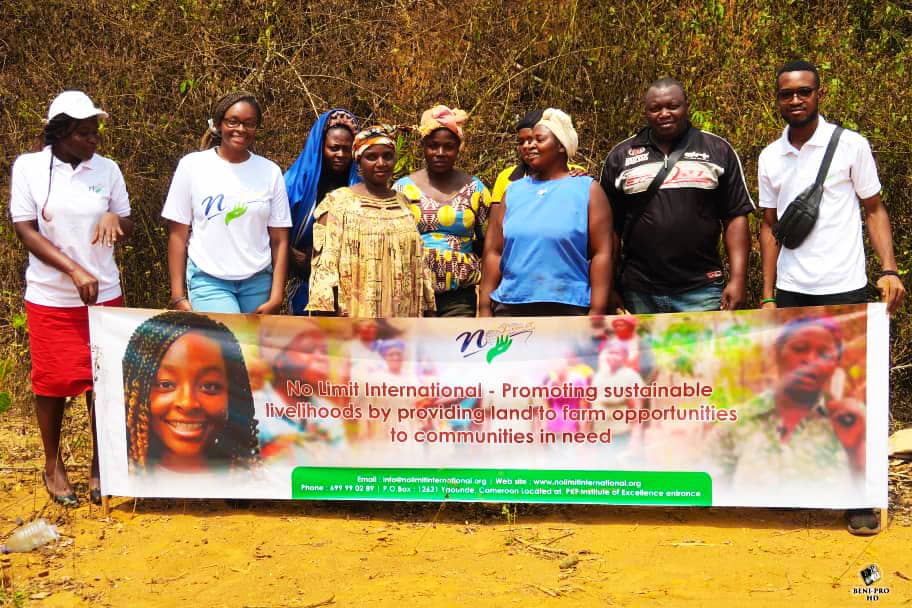
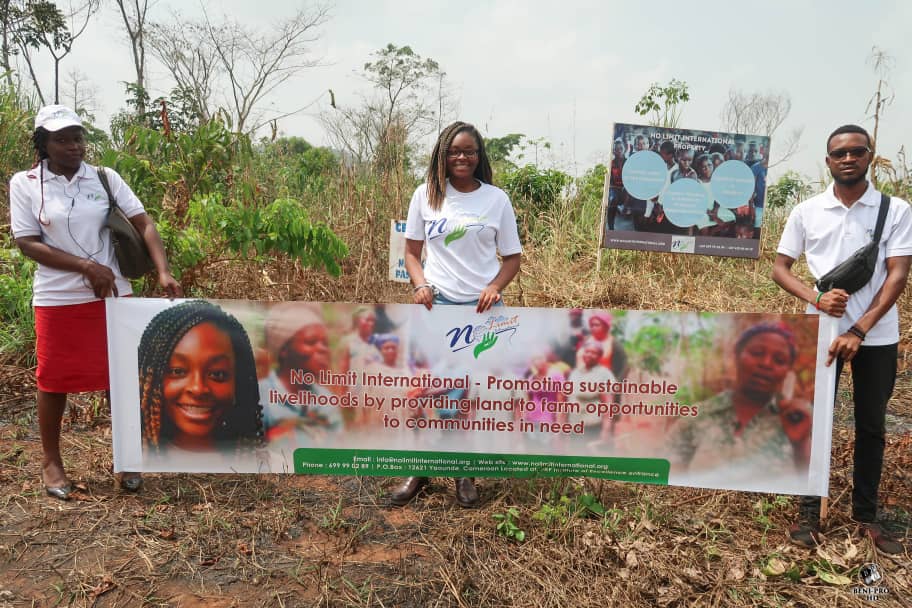
No Limit International has taken steps in the community to address Sustainable Development Goal 1 (End Poverty) and Goal 2 (Fight Hunger) by providing land-to-farm opportunities to vulnerable populations in Cameroon. The fact that people don’t earn income shouldn’t prevent them from seeking food security for their families in various ways.
FOOD FOR ALL AT AL COSTS
Under the leadership of Orlyanka TANTCHOU, Co-Founder of No Limit International, the program “Food For All At All Costs” was launched to end hunger by promoting sustainable agriculture through land access to families in need.
“Our goal is to achieve food security and promote sustainable agriculture as a means to end poverty and hunger. Let’s face it: food is grown, and the best way to help the needy is to provide access to land so that they can grow their own food.
We provide land-to-farm opportunities free of charge to vulnerable populations so that they can not only feed their families through farming but also sell the rest of the crop production in order to send their children to school and live decent lives.”
Orlyanka TANTCHOU